History · Draft feature
The 1776 Flag: What It Means, Where It Came From, and the Story Behind It
If you picture a “1776 flag,” you might imagine thirteen stars in a circle, a familiar colonial banner, or a modern design with the year woven into it. The tricky part is that there was no single national flag officially adopted in 1776. Several Revolutionary-era flags were in use, and the phrase can point to more than one design. The flag most often associated with the year is the Grand Union Flag, also called the Continental Colors.
What did the Grand Union Flag look like?
The Grand Union Flag, also called the Continental Colors, had thirteen alternating red-and-white stripes and the British Union in its upper-left corner. Its layout reflected colonies acting together while remaining part of Great Britain. The designer is unknown; Congress did not adopt it as an official national flag. The first flag formally authorized by Congress came in 1777.
A flag at sea, and a disputed moment on Prospect Hill
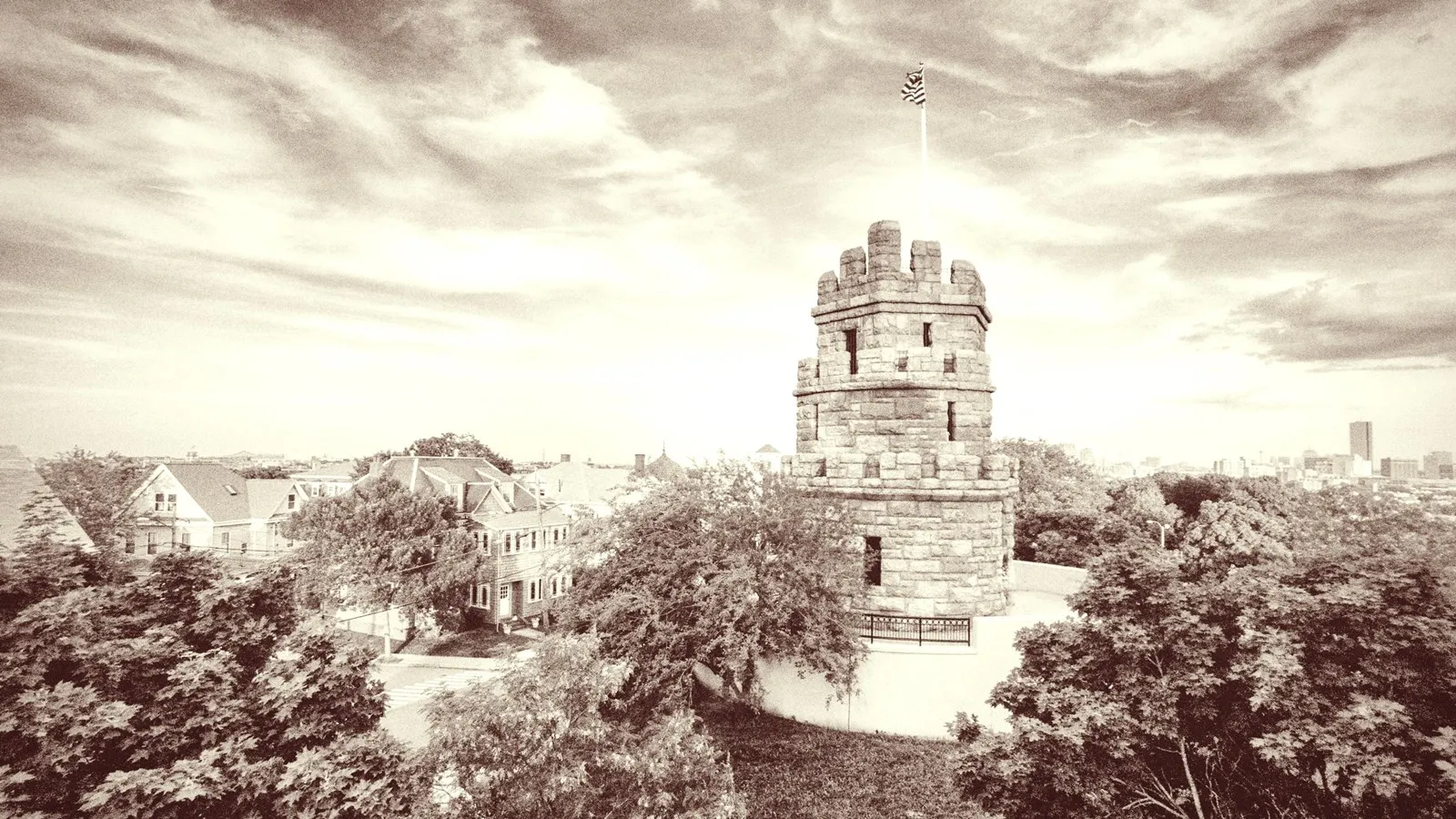
On December 3, 1775, Lieutenant John Paul Jones raised the flag aboard the Continental Navy ship Alfred, according to the National Park Service. George Washington’s January 4, 1776 letter described raising a “Union Flag” at Prospect Hill. Most scholars identify it as the Grand Union, though the precise flag remains debated. It is traditionally associated with the raising, not beyond question.
What did the flag mean in 1776?
The stripes represented the colonies acting together, while the British canton reflected a relationship not yet formally broken. The Declaration of Independence was adopted on July 4, 1776. The historical record establishes the design and uses, not one official explanation for every color or stripe.
Why “the 1776 flag” can mean different things
Revolutionary America used many banners. The Gadsden flag and New England pine-tree flags were distinct designs. Congress authorized the Stars and Stripes on June 14, 1777; the resolution did not dictate the stars’ arrangement. The Betsy Ross story was shared publicly by her grandson in 1870, and the National Park Service notes there is no proof she made the first national flag. The exact T-shirt artwork matters, because a Grand Union, Gadsden, pine-tree, circle-of-stars, or modern 1776 design tells a different story.
A story that keeps being retold
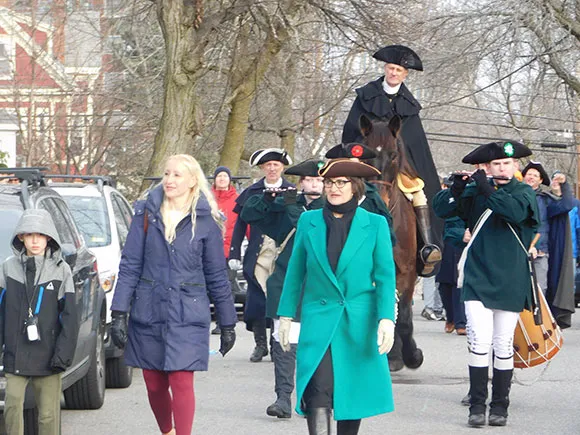
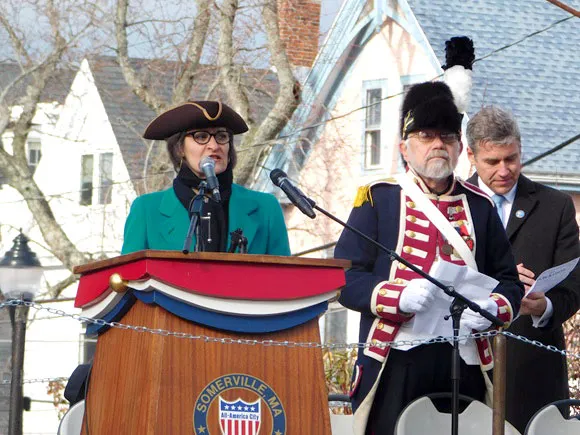
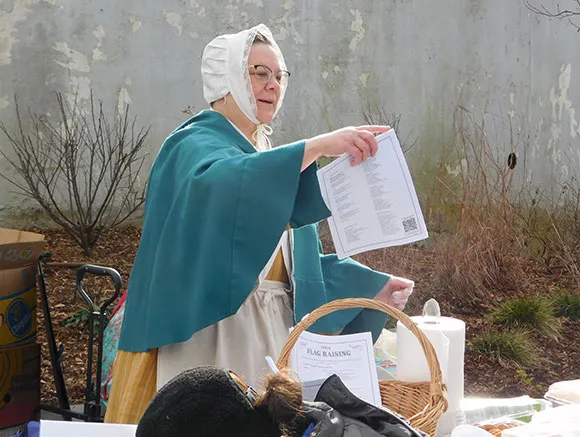
Somerville continues to raise a Grand Union Flag at Prospect Hill each January 1. A ceremony cannot settle every historical question, but it brings neighbors together around a story of unity, uncertainty, and a nation still becoming. Average Joe’s shirt-story series treats historical symbols as invitations to learn and talk, not as interchangeable slogans.