History · Draft feature
Join, or Die: The Story Behind America’s First Political Cartoon

A small woodcut in a Philadelphia newspaper carried a big argument: the colonies would be safer if they acted together. On May 9, 1754, Benjamin Franklin published his “Join, or Die” image in The Pennsylvania Gazette. The drawing is often called America’s first political cartoon, but Franklin’s original message was colonial cooperation, not independence from Britain.
A printer with a plan
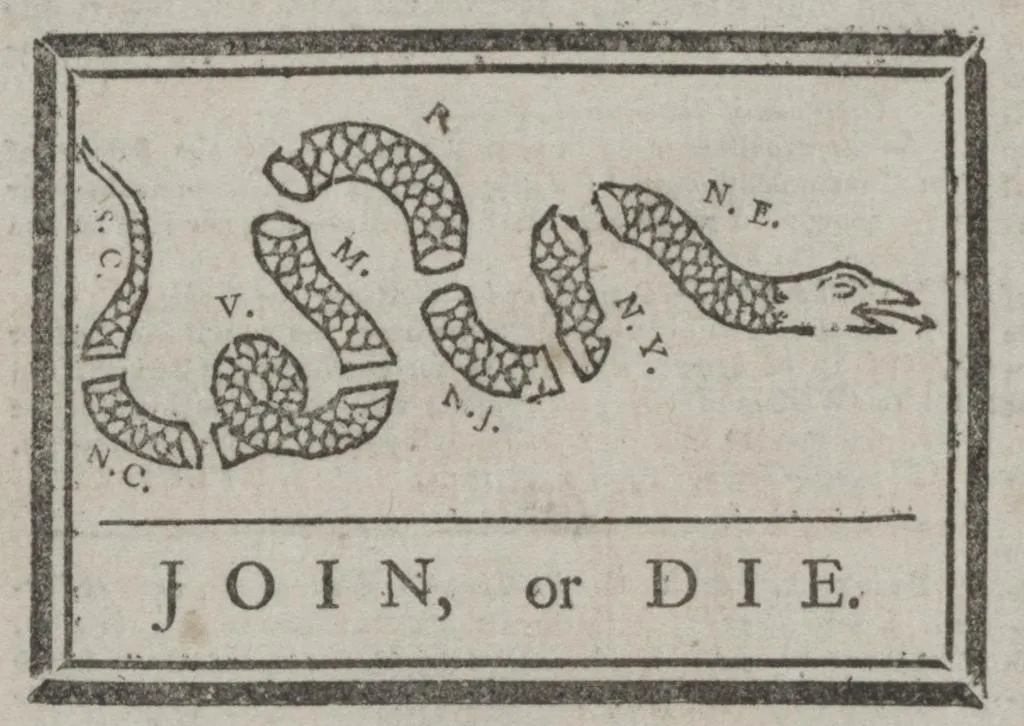
On May 9, 1754, Benjamin Franklin published “Join, or Die” in the Pennsylvania Gazette. The Library of Congress calls it the first political cartoon published in a newspaper in America. Franklin was urging cooperation for common defense, not independence. France and Britain were vying for territory, while Native nations made their own political and military decisions; the situation was not a simple contest between two unified sides.
What the snake’s segments represented
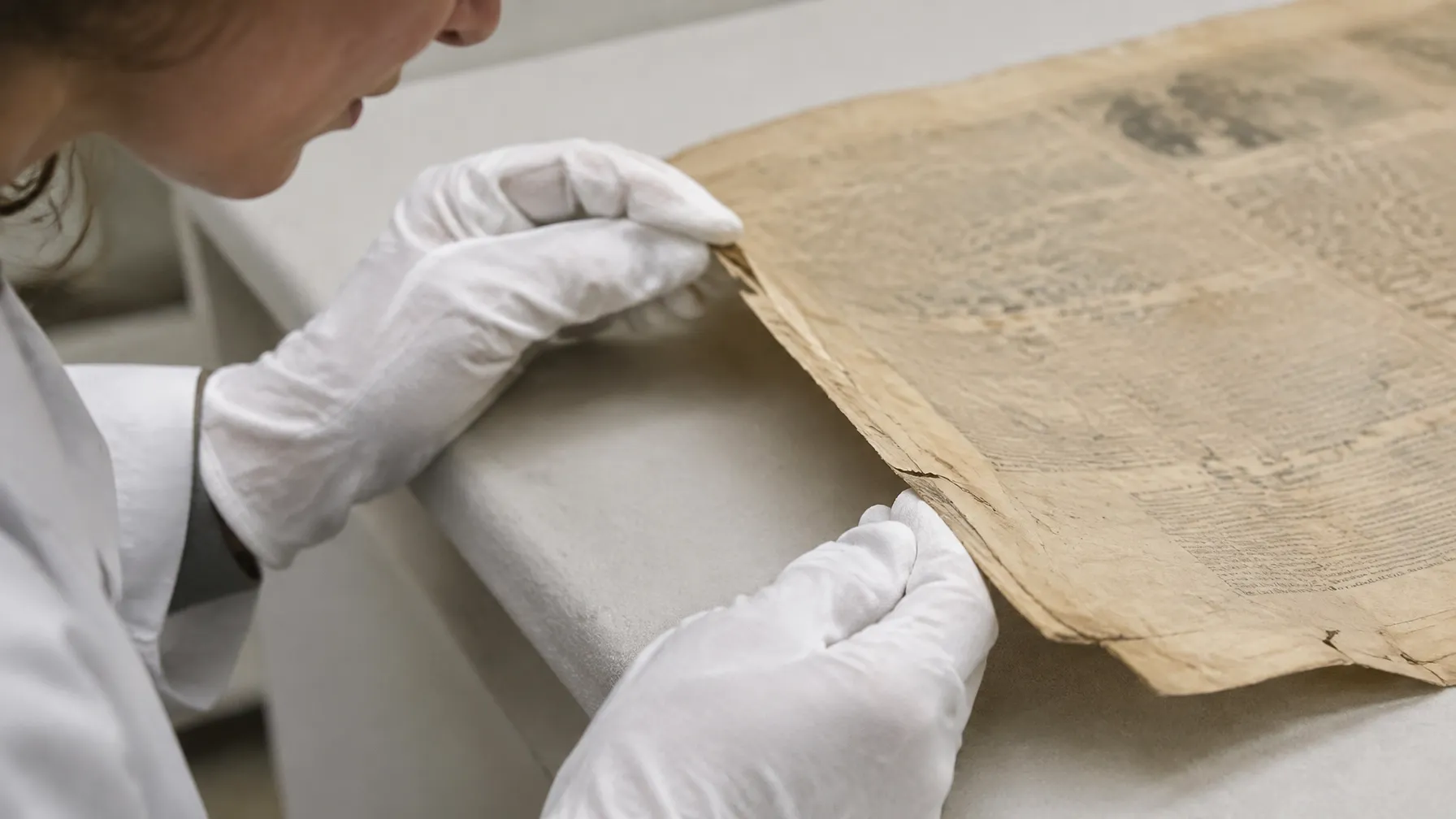
The eight sections, marked S.C., N.C., V., M., P., N.J., N.Y., and N.E., stand for South Carolina, North Carolina, Virginia, Maryland, Pennsylvania, New Jersey, New York, and New England. It was not a one-piece-per-colony map; Georgia and Delaware are absent and New England is represented as one section. Franklin’s image made the argument that separate pieces could be stronger joined together. The original page is available in the Library of Congress’s digitized May 9, 1754 Gazette.
The Albany Plan came later

The cartoon appeared May 9, 1754. The Albany Congress began June 19 and adopted the Albany Plan on July 10. Franklin attended as a Pennsylvania commissioner. The plan proposed a Grand Council and president general, with responsibilities including common defense and relations with Native nations, but it was never put into effect. It was not a declaration of independence. See the U.S. Department of State’s history of the Albany Plan.
From common defense to colonial resistance
More than a decade later, printers revived the image amid protests against British policies. On September 21, 1765, it appeared on the masthead of The Constitutional Courant during opposition to the Stamp Act. Later adaptations gathered new meanings, but Franklin’s 1754 cartoon originally argued for colonial cooperation, not revolution.
A symbol worth wearing thoughtfully
The image endures because its idea of people working together is easy to recognize, though symbols can mean different things in different contexts. Average Joe’s shirt-story series treats this design as a conversation starter about Franklin, colonial newspapers, and the people and debates that shaped history—not an endorsement of any modern political faction.
“Join, or Die” at a glance
May 9, 1754: Franklin publishes the woodcut. June 19: the Albany Congress begins. July 10: delegates adopt the Albany Plan. September 21, 1765: the cartoon appears on The Constitutional Courant amid Stamp Act resistance. Later printers adapt the image to new political contexts.